A Law Meant to Protect
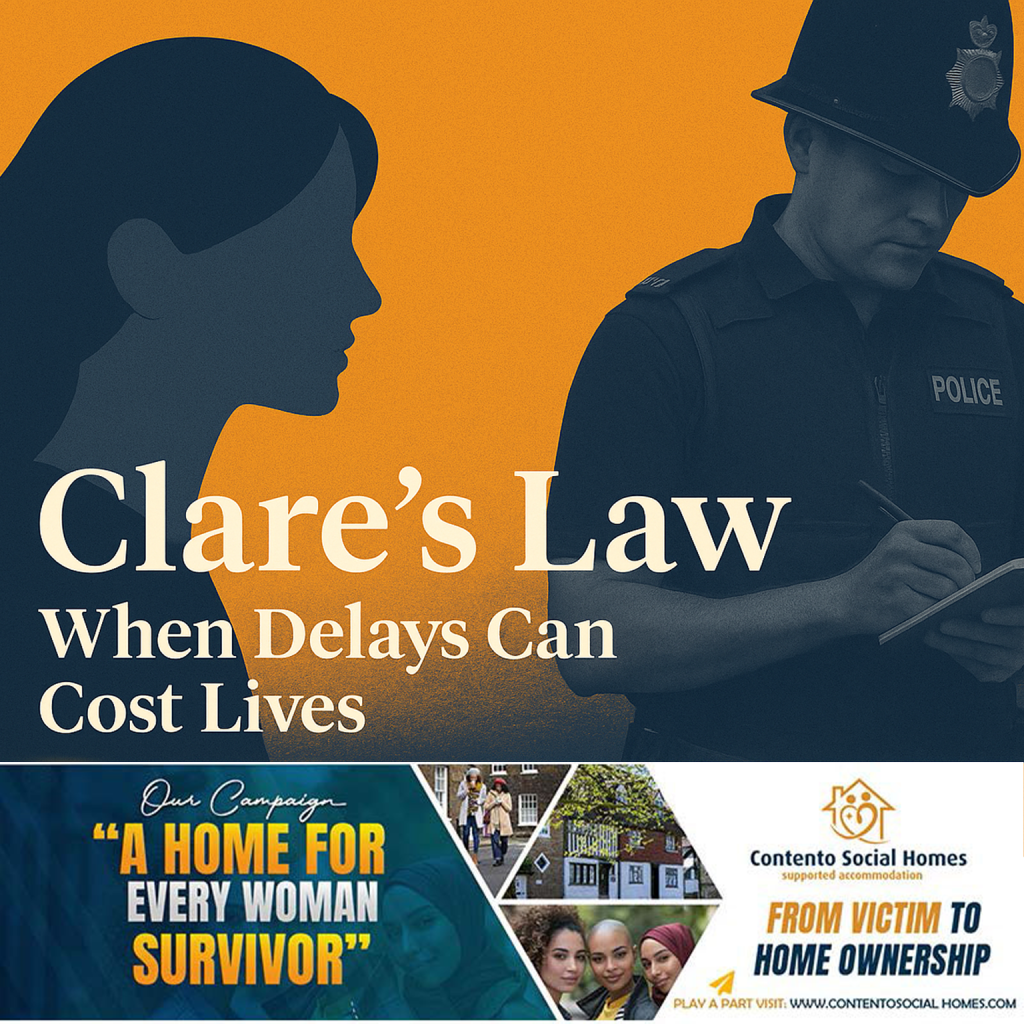
In 2009, Clare Wood was murdered by her ex-partner—a man with a known history of violence against women. Her death sparked public outrage and led to the creation of the Domestic Violence Disclosure Scheme (DVDS), commonly known as Clare’s Law.
The scheme gives people the “right to ask” police whether their partner—or someone they are worried about—has a history of abusive behaviour. It also allows police to act proactively through a “right to know”, where they can share information if they believe someone may be at risk.
In principle, Clare’s Law exists to save lives. But as a recent BBC investigation reveals, in practice, delays and system failures are still putting people in danger.
Sarah’s Story: A Call for Urgency
Sarah (not her real name) was pregnant when she asked the police for information about her boyfriend’s past. She had started noticing worrying behaviour—accusations of cheating, controlling her movements, and emotional manipulation.
Under government guidelines, police should respond to a Clare’s Law request within 28 days. Sarah followed up a month later and was told there was nothing to disclose.
Five months later, she discovered that her partner had previously strangled other women. By that time, she had already experienced the same violence firsthand—choking, threats, and fear for her safety and her unborn child.
“I just feel that had the Clare’s Law disclosure been given correctly at the correct time, then I could have made an informed decision as to whether I should stay or not.”
— Sarah (BBC News interview)
Her case isn’t isolated.
The Reality Behind the Numbers
Freedom of Information data obtained by the BBC shows alarming delays:
- 7 police forces in England and Wales failed to meet the 28-day limit in most cases during 2024.
- In Avon and Somerset, 80% of disclosures took longer than the legal timeframe.
- In Wiltshire, delays have previously led to people coming to harm.
Requests under Clare’s Law have surged — from 14,000 in 2019 to nearly 59,000 in 2024 — but police forces say they lack the resources to manage the demand. Some victims have waited more than two years for a response.
While several forces have since increased staff and restructured their domestic abuse units, the damage for many survivors has already been done.
When Time Equals Safety
Experts stress that Clare’s Law is most effective early in a relationship, before an abuser has gained control.
Dr Charlotte Barlow, a criminologist at the University of Leeds, explains:
“When you are in a relationship with an abuser, it’s incredibly difficult to leave. Delays increase the risk because by the time a disclosure comes, the victim may already be trapped.”
Dr Katerina Hadjimatheou from the University of Essex adds that the system is “a massive resource burden on police” and argues that domestic abuse services—not police—could be better placed to handle initial requests.
Her research shows that most people who apply for a disclosure have never accessed other forms of support, meaning that Clare’s Law represents a vital point of early intervention.
A Shared Responsibility
At Contento Social Homes, we support survivors of domestic abuse and advocate for safer systems that work when they’re needed most. Clare’s Law was designed as a lifeline — but it can only serve its purpose if responses are timely, accurate, and supported by wider safeguarding networks.
No survivor should have to endure abuse while waiting for information that could have protected them.
If you are concerned about your partner or someone you know, you can make a Clare’s Law request through your local police force.
- Call 101 (non-emergency) or visit www.gov.uk/domestic-violence-and-abuse for more information.
- If you are in immediate danger, always call 999.
- Support is also available through organisations like Refuge, Women’s Aid, and National Domestic Abuse Helpline (0808 2000 247).
Our Commitment
Contento Social Homes continues to raise awareness of the barriers survivors face and advocate for systems that protect women and children faster, better, and more compassionately.
Our mission is clear: A Home for Every Woman Survivor.
Because safety shouldn’t depend on waiting times.
Sources:
- BBC News: “Police failed to tell me about my partner’s violent past. He ended up choking me” — By Harriet Agerholm, Senior Data Journalist, BBC Verify (29 October 2025)
- UK Government Domestic Violence Disclosure Scheme Guidance (2023)
- University of Leeds and University of Essex Research on Clare’s Law