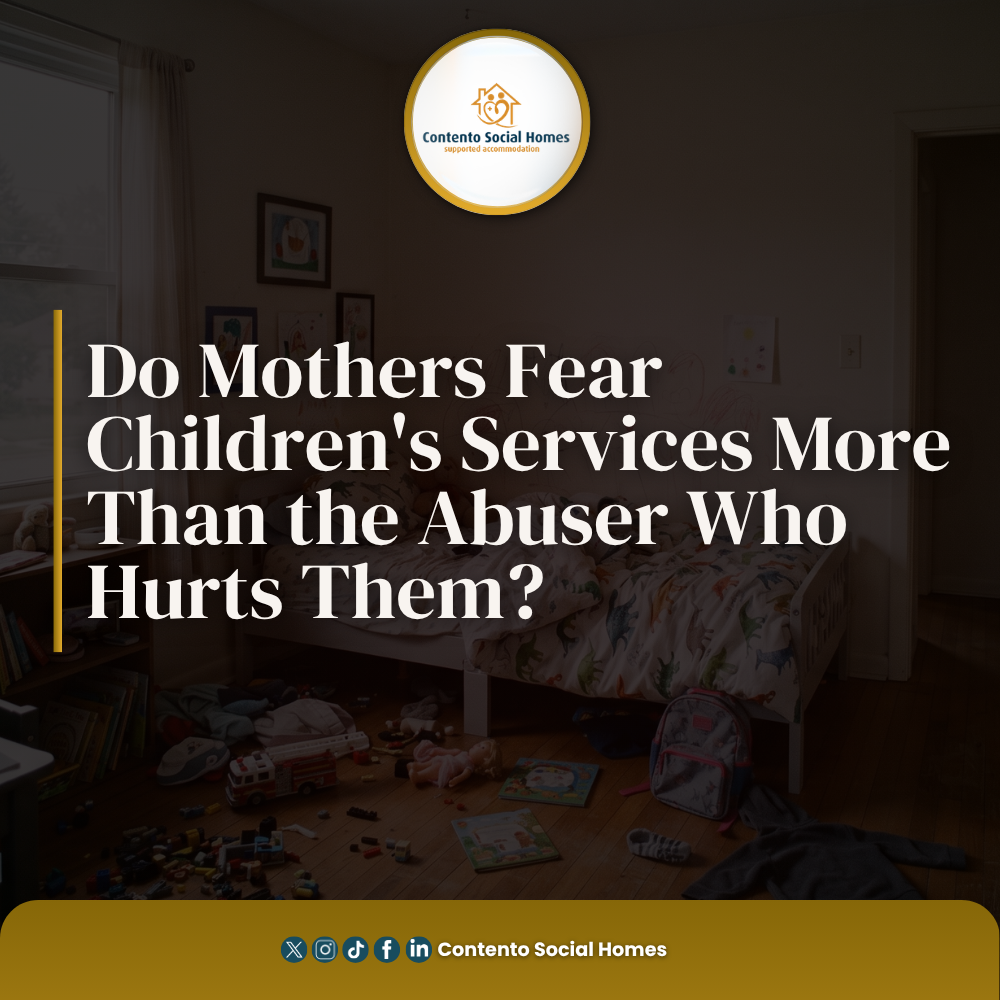
A mother with a young child picks up the phone to report the man abusing her. Before she dials, she runs a
calculation that women without children never have to make: what happens to my child if I do this?
The answer is not obvious to her, and the research suggests she is right to be uncertain.
What the case files show
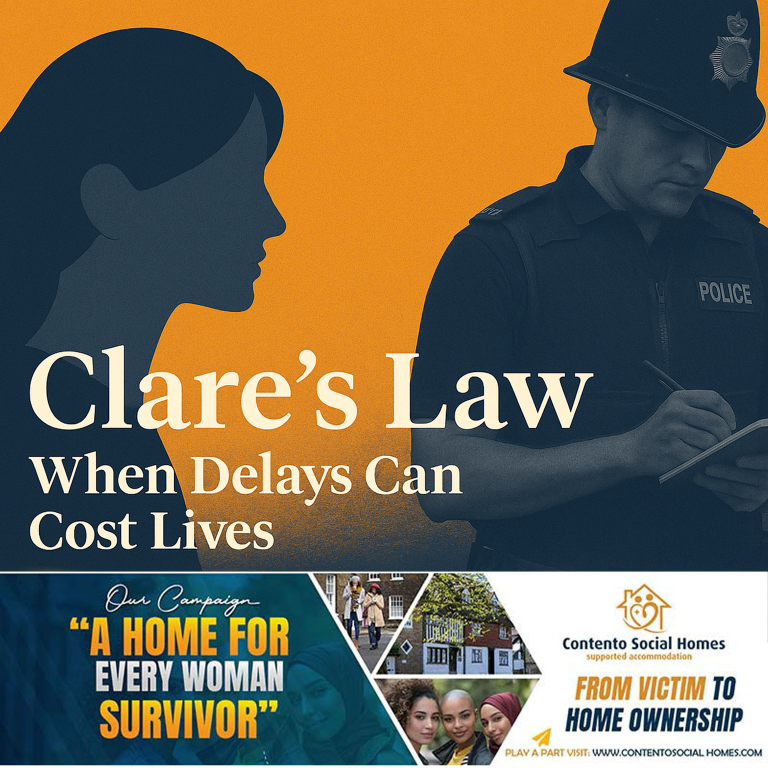
In January 2025, the Domestic Abuse Commissioner published a study led by Dr Lis Bates of the Open University.
The researchers analysed 88,949 domestic abuse crime records from seven police forces, examined 140 case files in
detail, interviewed 31 survivors and ran focus groups with officers.
Among the reasons women stopped supporting police action, two applied specifically to mothers. Case file analysis
found that women with children disengaged more often because they were afraid children’s social care would
become involved. Others did not want to criminalise their child’s father.
The study also found that police and mothers were reading the same situation differently. Officers in focus groups
believed mothers were more likely to stay engaged, and some assumed a mother reporting abuse was trying to gain
ground in a contact dispute. The case files showed mothers dropping out more, not less. Survivors interviewed
described being dismissed as reporting “just child contact disputes.”
The researchers concluded that a gulf remains between police and mothers over how seriously abuse affecting
children is taken, and that this gulf is itself pushing women out of the process.
The calculation a mother is actually making
The Family Rights Group, which advises parents whose children are involved with children’s services, describes the
position plainly. A mother may fear that if she does not report the abuse, she will be seen as failing to protect her
child. But if she does report it, the report becomes evidence of ongoing risk to her child. The charity notes that
women in this position often feel they are in an impossible situation.
That is not a fear of the wrong thing. It is an accurate reading of how the system can work.
A review by Iriss of research on women’s experience of social work intervention found the threat of having children
removed is acutely felt by mothers, and that women reported being told they must leave their partners or their
children would be taken. A separate study interviewing 19 mothers across England and Wales found the same
pattern: mothers felt blamed for their children’s exposure to abuse and were given what researchers called a leave
ultimatum.
Leaving, of course, is the most dangerous period for a woman in an abusive relationship. The ultimatum asks her to
take the highest-risk action she can take, on a deadline set by someone else, with her children as the stake.
So which fear is bigger?
No study has measured the two against each other, and any answer that claims otherwise is guessing.
What the evidence does show is that the two fears are not separate. The perpetrator is the reason children’s services
would be involved at all, and in some cases he is the one who points that out to her. What distinguishes the two is
predictability. A mother generally knows what her partner will do. What the state will do is unknown to her, and she
has heard enough to be frightened of it.
For a mother of young children in particular, the stakes are not symmetrical. She may believe she can survive him.
She is less sure she can survive losing her children.
The scale of it
The For Baby’s Sake Trust published research in 2025 finding that almost 50,000 babies a year are referred to
children’s social care with domestic abuse recorded as a factor. Pause, which works with mothers who have had
children removed, said nearly all the women it supports have been affected by domestic abuse, and that for many,
the abuse played a part in why their children were taken.
These are not two separate populations. They are largely the same women at different points in the same process.
Where housing comes in
There is one more finding in the Bates study worth putting next to all of this. When researchers ran focus groups
with police officers, one reason for women staying with perpetrators came up that appeared nowhere in the case files
or the survivor interviews: officers said women had nowhere to go, and no decent housing options available.
This matters, because the leave ultimatum and the housing problem collide directly. A mother told to leave or risk
losing her children cannot comply if there is nowhere to take them. The demand and the means to meet it are
handled by different parts of the system, and nobody is responsible for making sure they match.
Contento Social Homes houses women and children after they leave an abusive home, and stays involved through
the period when a family is trying to establish something stable. That is the narrow part of this problem we work on,
and it is the part that determines whether leaving is possible at all.
What would change this
The Bates study recommends that when children are present, police explain the process clearly to the mother,
including that a referral to children’s services is automatic and what it does and does not mean. At the moment, the
fear fills the gap where the explanation should be.
The wider recommendations from the social work research point the same way: assess a mother on what she has
done to protect her child rather than on whether she has left, and recognise that leaving is a process with a risk
attached, not a box to tick.
If you can support the housing side of this, whether by donating, referring a woman who needs somewhere safe, or
passing this on, that is where it makes a difference.
Sources
● Bates, L., Hopkins, A., Taylor-Dunn, H. and Morrison, S. (2025), Victim-survivor disengagement from
police in domestic abuse cases: who, when and why?, published by the Domestic Abuse Commissioner,
January 2025: domesticabusecommissioner.uk
● Family Rights Group, Domestic abuse FAQs for mothers: frg.org.uk
● Iriss, Domestic abuse and child protection: women’s experience of social work intervention: iriss.org.uk
● Mothers, Domestic Violence, and Child Protection: The UK Response (study of 19 mothers in England and
Wales): pubmed.ncbi.nlm.nih.gov